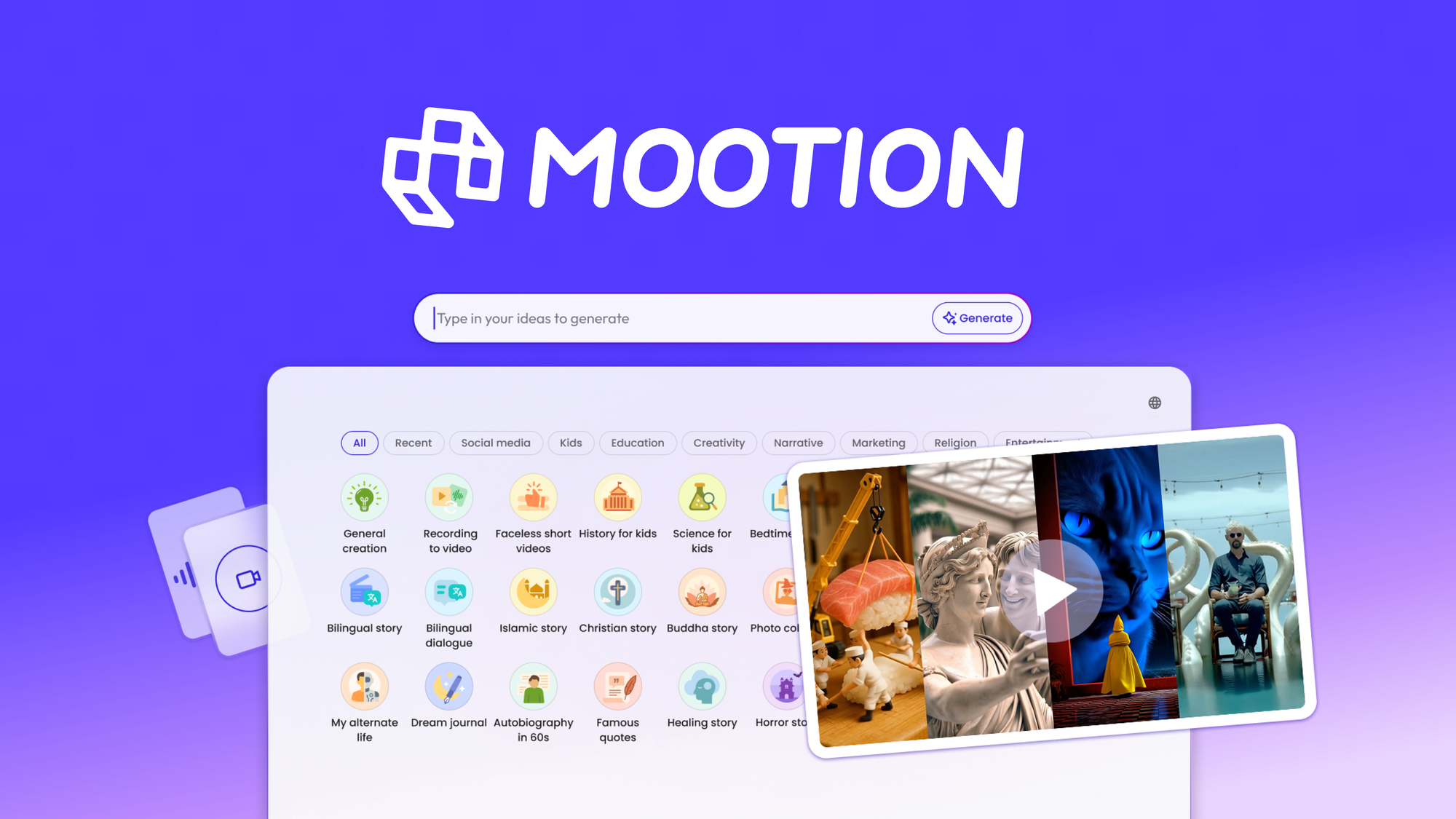
You want webinars and streaming tools that save time, reduce friction, and help you present professionally. This comparison cuts through the noise so you can pick the right tool quickly.
FuseBase shines as a collaborative, all-in-one workspace that can centralize notes, client portals, and webinar assets, while Mootion focuses on turning scripts and images into cinematic videos. Knowing the differences helps you choose the best selling option for your needs and avoid buying features you won’t use.
|
Category |
Product |
Price |
Score |
|---|---|---|---|
|
🚀 Best for Collaboration |
$79 |
95/100 |
|
|
🎨 Best for AI Video |
$69 |
78/100 |
You should be able to judge tools on how they help you plan, present, and publish. We evaluated: usability (how quickly you can run a webinar or create a video), core features for streaming or content delivery (recording, portals, scene/visual controls), collaboration and client access (permissions, shared workspaces), AI automation (summaries, video generation, voiceovers), reliability and support, user feedback and ratings, and value for price.
We also considered practical limits you’ll hit in real projects—credit consumption for video engines, or compliance features like BAAs for client work—so you know which tool matches your workflow and budget.
Automate teamwork, client collaboration, and busywork on secure, AI-powered workspaces with 24/7 agents
$79
If you’re juggling notes, client work, and project tasks, FuseBase feels like that one tidy desk you always wish you had. It combines docs, tasks, portals, and AI helpers into a single workspace so you don’t have to hop between five apps.
Use it day-to-day to capture meeting notes, manage to-dos, and share branded client portals; for special projects you can spin up databases, publish public pages, or hand clients a polished status portal. It’s also been one of AppSumo’s Best selling productivity tools for people who want a central, reliable hub.
If you want to consolidate tools and save time, FuseBase is an easy platform to try and stick with.
Customers often highlight how FuseBase replaces multiple tools: people appreciate the client portals, faster performance compared with earlier versions, and features like web capture and media recording. A few customers also note a learning curve and a pending HIPAA/BAA issue for certain tiers.
🗣️ FFM
Fusebase is at the center of our collaborative work on projects, content development, and content distribution — notes, tasks, documents, client spaces, and internal knowledge bases all in one place. Structured client portals with permissions and custom branding have significantly improved how we collaborate.
🗣️ Avinash.Katta
Speed is noticeably better than the old Nimbus Note. Web capture is impressive, you get unrestricted video/audio recording, document scanning, portals and password-protected public pages — I use it for publishing content, teaching students, client content and drafting workshop notes.
|
Pros |
Cons |
|---|---|
|
✅ Centralizes docs, tasks, and client portals in one place |
❌ Learning curve when moving to a broader workspace |
|
✅ Fast performance and strong capture/recording features |
❌ HIPAA/BAA delays reported by some users (tier-dependent) |
|
✅ Flexible views and templates for repeatable workflows |
|
|
✅ Rich collaboration: comments, mentions, and permissions |
|
|
Aspect |
Ease Level |
Notes |
|---|---|---|
|
Setup |
Moderate |
Initial setup is straightforward, but configuring client portals and advanced databases takes a bit of time. |
|
Daily Use |
Easy |
Once you’re set up, creating notes, tasks, and shared pages feels intuitive and fast. |
|
Collaboration |
Easy |
Comments, mentions, and permission controls make teamwork smooth and transparent. |
|
Learning Curve |
Moderate |
Power users will love the features, but there’s a short adjustment period for those coming from single-purpose apps. |
FuseBase is reported to be noticeably faster than its predecessor, with quick page loads, fast web capture, and smooth media recording. Performance holds up even when you use databases and portals.
|
Feature |
Protection Level |
|---|---|
|
Data Encryption |
High |
|
Access Controls & Permissions |
High |
|
HIPAA / BAA Availability |
Limited / Pending |
FuseBase scales from solo use to agency-level workspaces, handling more projects, users, and client portals without needing separate tools.
Current Price: $79
Rating: 4.77 (total: 552+)
Turn ideas, text, images, and audio into stunning videos with this user-friendly AI video generator
$69
If you want a straightforward way to turn scripts, images, and audio into short, cinematic videos, Mootion makes that workflow easy to try. You can use it day-to-day for social posts, quick explainers, and faceless marketing clips, or for special projects like event recaps and short storytelling pieces. It leans on AI to auto-generate scenes, voiceovers, and animations so you spend less time stitching assets together.
It’s not perfect for very long, high-volume production, but for many creators it’s a Best selling-style pick for getting polished clips fast.
Customers appreciate Mootion’s creative automation and the ability to produce cinematic, watermark-free videos quickly. Feedback often praises the visual styles and customization, while also noting limits around long videos, credits, and some voice/image quality issues.
🗣️ Mbr
Great addition to my AI toolkit — Tier 1 fits my needs and lets me create videos and short stories in different visual styles. The tool feels flexible for creative experiments.
🗣️ Avinash.Katta
Produces cinematic, fully animated 1080p videos with AI-powered automation and real-time customization — useful for explainer and social content when you need quick, polished output.
|
Pros |
Cons |
|---|---|
|
✅ Fast script-to-video flow for short marketing and social clips |
❌ Credits can be consumed quickly for longer videos |
|
✅ High-quality 1080p, cinematic visuals for many use cases |
❌ Some users report robotic voices or freezes on long animations |
|
✅ Good customization: captions, transitions, and avatars |
❌ Image-to-text accuracy and some generation outputs can be inconsistent |
|
Aspect |
Ease Level |
Notes |
|---|---|---|
|
Setup |
Easy |
Sign-up and basic workflows are straightforward; you can start a script-to-video project in minutes. |
|
Editing |
Moderate |
Scene tweaks and caption edits are intuitive, but multi-scene effects and fine-grained control need improvement. |
|
Previewing |
Moderate |
Short previews work well; longer videos may need re-renders and can consume more credits during iteration. |
|
Advanced Controls |
Hard |
Power users may miss deeper controls for per-scene effects, character customization, or precise voice timing. |
Mootion is quick for short, single-scene clips and produces polished 1080p results fast. Be aware that long-form animations can stall or require re-rendering, and heavy projects use significant credits.
|
Feature |
Protection Level |
|---|---|
|
Data Encryption |
High |
|
Account Access Controls |
Moderate |
|
Privacy & Data Use |
Limited |
Mootion scales well for individual creators and small teams producing occasional videos, but heavy users or agencies creating many long videos may find credit limits and performance a bottleneck.
Current Price: $69
Rating: 3.89 (total: 112+)
You should pick based on what you need to do: if you want a Best selling all-in-one workspace to organize webinar content, host client portals, record audio/video, store scripts, and run follow-up workflows, FuseBase at $79 is the more suitable option. If your priority is creating polished promo videos, animated clips, or AI-driven visual assets to promote or repurpose webinar content, Mootion at $69 is focused on video generation. You can also use them together by managing planning, registration pages, and recordings in FuseBase and creating trailers, short social clips, or animated explainers in Mootion.
You can integrate either tool into a streaming workflow but they serve different roles: FuseBase is built for collaboration and content distribution so you can use it to share links, host password-protected pages, collect resources for attendees, and keep recordings and transcripts organized for post-event editing. Mootion produces finished video assets you can import into OBS, Streamlabs, or your video editor to play during streams or as promotional clips. Before you buy, confirm platform-specific requirements like HIPAA and BAAs for sensitive data with FuseBase if that matters to you, and test Mootion samples to check voice, language support, and credit consumption for the length of video you plan to generate.
You should evaluate real usage: check FuseBase's collaboration, recording, portal, and security features and verify any BAA or HIPAA commitments if you work with protected data; note that some users reported delays on BAAs so confirm timing before relying on HIPAA claims. For Mootion, check credit rates, script length limits, language voice quality, and sample outputs because animated videos can consume credits fast and some reviewers noted room for improvement in text-in-image and longer animations. A practical approach is to start small: use FuseBase to centralize scripts and host webinar resources, run a short test webinar and export the recording, then create a short promo or clip in Mootion to test voice and timing. If you need long-form or many videos, plan budget for credits and export quality; if you need secure client portals and team collaboration, budget around $79 for FuseBase and consider it a Best selling choice for teams that want to consolidate tools.
You have two different problem-solvers. FuseBase is best if you need a centralized workspace where webinar materials, client portals, notes, tasks, and automations live together—this makes running repeatable webinars and client-facing streams smoother.
Mootion is the pick if your priority is quick, AI-driven video creation and cinematic social clips rather than team collaboration. Pay attention to limitations: Mootion can consume credits fast and has some quality and editing constraints, while FuseBase can require time to learn and may have compliance steps for things like BAAs. If you want one platform to manage webinars end-to-end and collaborate with clients, choose FuseBase.
If you want to produce visual, story-driven videos from scripts, choose Mootion. Either way, focusing on the features you’ll use most will help you get the most value from these best selling options.
| FuseBase | Mootion | |
|---|---|---|
|
|
|
|
| Rating | 4.77/5 (552 reviews) | 3.89/5 (112 reviews) |
| Key Highlights |
|
|
| Target Audience | Teams and businesses seeking a comprehensive collaborative platform for project management and client communication. | Content creators and marketers looking to create engaging videos without extensive editing skills. |
| Limitations | Some users report a learning curve due to the platform's comprehensive features. | Some users experience limitations with AI quality and video rendering issues; credit system can restrict usage. |
| Price | $79 | $69 |
| Get Details | Get Details |
This Roundup is reader-supported. When you click through links we may earn a referral commission on qualifying purchases.